


Al was once a distant reality, and now it is firmly the present. As many global enterprises struggle to scale AI pilots and truly embed Al throughout workstreams, leaders like Deepak Subramanian, President & Managing Director of North America for Unilever Food Solutions, are redefining this era of scaling AI. With all the excitement and investment in AI, corporates are rushing to implement. Many companies are investing millions in artificial intelligence and have never been more bullish. Yet six months later, many companies are still struggling to embed Al in workflows. This is the paradox of enterprise Al in 2026.
In this conversation with Pranay Agrawal, CEO of Fractal, and Deepak Subramanian, they spell out the common pitfalls and winning strategies for AI implementation. Deepak's 30+ years of leadership at Unilever bring a valuable perspective to many corporate leaders looking for practical avenues for scale.

The pilot purgatory problem
Deepak articulated a common challenge for C-suite executives: nearly all large organizations now have an AI strategy, but almost none have figured out how to scale it. The difference between having a strategy and executing one is the pilot-to-scale gap. This gap is the most critical for reaching ROI targets and bringing value throughout the organization.
At Unilever, the mission is clear: integrate AI into enterprise-wide workflows, not as an experiment, but as a core business capability. However, this begs the question: how do leaders get there? Deepak laid out a key framework: three horizons where Al creates value.
Horizon One. Horizon one is the objective of making things cheaper. This is the easy sell to management or the board. Procurement and R&D teams already speak the language of efficiency and cost reduction. AI delivers measurable ROI almost immediately.
Horizon Two. The second horizon contains business goals related to growing faster and making things better. This involves activities for speed and quality enhancements. Embedding Al into these activities can have incredible results.
Horizon Three. The third horizon aims to create entirely new competitive advantages. This is the frontier. It's where agentic AI meets unique workflows, where the business discovers capabilities that didn't exist before.
Most companies are competent at Horizon One. Some companies have mastered Horizon Two. Few organizations successfully achieve Horizon Three. However, organizing the business objectives into frameworks like this gives leaders the strategy they need to successfully reach their value-creation targets.
Why outcomes matter more than tools
Organizations tend to begin their AI journey focusing solely on the LLMs or LRMs. Pilots launch, but scale never happens because the leadership hasn't addressed workflows, high-level business goals, and stakeholder incentives.
With any type of organizational change, executives need to understand the sources of value creation and the stakeholders involved. Every change must begin with the sources of value; the same is true with AI. This "outcome-based" approach is non-negotiable.
Deepak and Pranay Agrawal, Co-founder and CEO of Fractal, emphasized this approach: start with the outcome.
Name the business result you want to achieve, then work backward with technology as the tool. Fractal has distilled this into five pillars of client success: build better products faster, engage seamlessly with your audience, improve operational effectiveness, drive better executive decisions, and build a sustainable future.
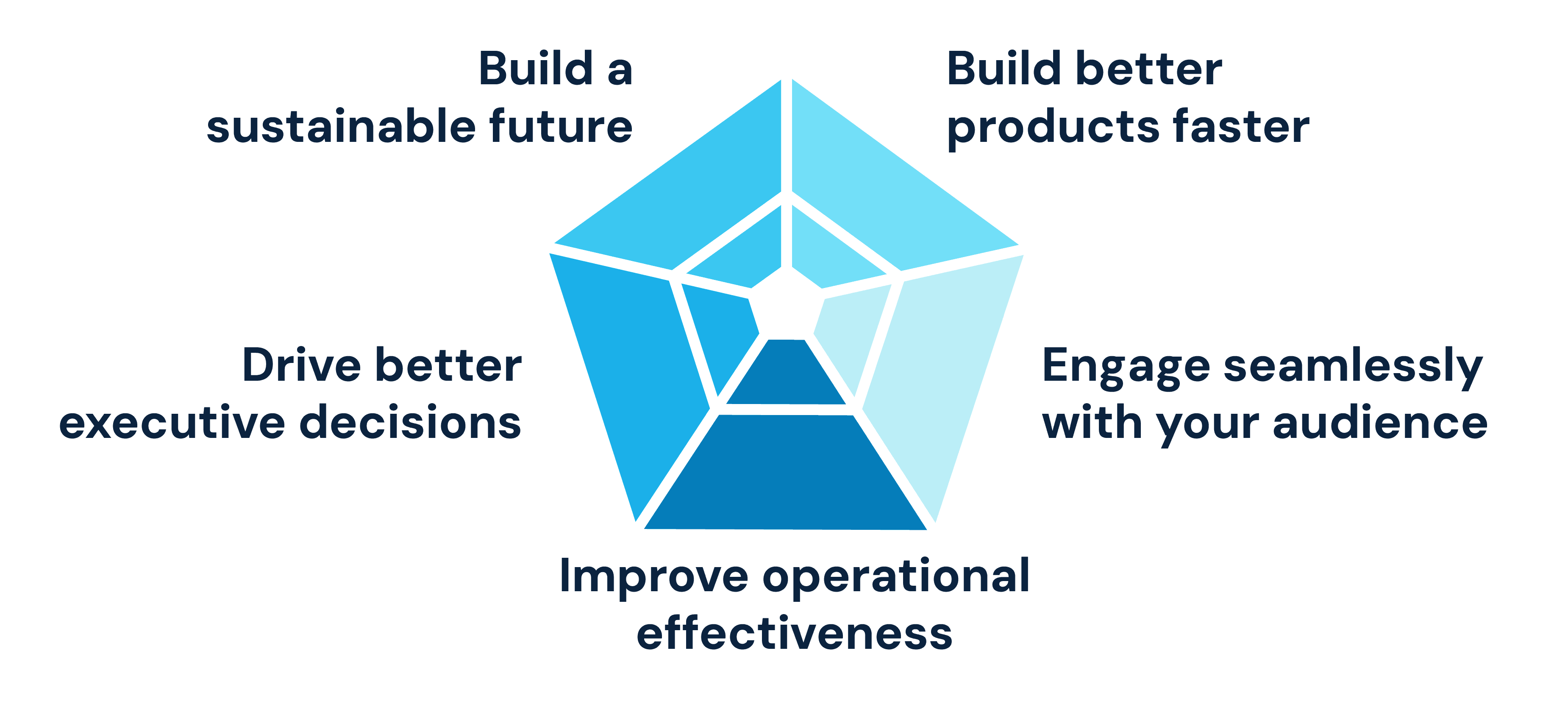
Every AI initiative in every organization can be mapped to one of these five. When leaders use these as their north star, they stop building more pilots, and instead, they prioritize and scale.
The local-global paradox
Unilever operates in markets across the globe. Each market has its own customer base, regional preferences, regulatory requirements, and competitive dynamics. This creates an inherent tension: how do you maintain global consistency while staying locally responsive?
Deepak explained how Unilever is approaching this with Al: globally, they maintain their technology stack, governance frameworks, responsible AI guidelines, and cybersecurity protocols. These must be maintained globally. A consumer data privacy safeguard must look the same anywhere in the world.
Locally, Al becomes the vehicle for hyper-personalization. Consider the evolution of consumer choice: twenty years ago, shoppers faced 30 options on a grocery shelf. E-commerce democratized selection, offering thousands of choices online, but recommendation engines narrowed it down to the top 3 choices. Now, with AI, it's down to one, personalized specifically for you. Shoppers have gone from 30 choices to one. This is the evolution of hyper-personalized localization.
Enterprises with global principles and local execution win. This is the formula that separates companies that deploy AI from companies that are transformed by it.
The creativity equation: Machines + Humans
One of the most revealing moments in our conversation came when Deepak described his vision for Al in creative work: "humans set the direction; machines deliver it with precision. " He highlighted that this is "the next wave of creativity." This is true. Creativity, at its essence, is taking two unconnected things and finding a new way to unite them, discovering meaning in unexpected combinations. Humans are brilliant at that. Machines are brilliant at executing at scale with perfect consistency. Together, they create new levels of scale and execution.
Deepak pointed to Dove's famous self-esteem campaign, which challenged the way women are praised for their appearance rather than their achievements. Through data analytics and creative AI, Dove identified this insight and built a campaign around it. AI helped identify the patterns, and humans created a meaningful strategy. Together, they launched a valuable campaign.
Another example is Unilever's beauty AI studio. The AI studio is amplifying the human creative team. Content is produced faster and 30% cheaper, with click-through rates that have doubled. The studio is enabling mass customization at a scale that would be impossible for humans working alone, while maintaining the human judgment that turns data into insight, insight into narrative, and narrative into action.
The competitive advantage you can't outsource
Deepak highlighted an important reality. In five years, AI will be fully democratized. Every company will have access to the same models. The technology moat will disappear. So, what becomes the key competitive advantage?
Deepak was clear: "The performance gap will be amplified." The organizations that win will be those that have deeply embedded AT into their systems, not as a tool but as a way of working. They will have changed their workflows, their decision-making, their culture. They will have answered the hard question: What does it mean to make decisions differently when you have AI available?
This requires something that no vendor can sell you: organizational change management at scale. That requires upskilling employees, building governance structures that protect responsible AI deployment, and creating a culture where people trust the machine enough to use it, but question it enough to avoid blind dependence.

Creating outcomes that didn't exist before
Perhaps the most exciting part of Deepak's work is in building capabilities that simply didn't exist in the pre-Al era. Take Unilever's new digital demand engine.
For Unilever's customers that are food service operators, the question became: How do we help them understand what's happening with the diners they serve? How do we give them real-time intelligence about changing food preferences, emerging dietary trends, and what's trending on social media in their neighborhood?
The answer: B2B value creation. Partnering with Tastewise, Unilever built a system that scrapes over 2 million menus and monitors millions of social media conversations within a 2-mile radius of any restaurant. AI analyzes the data. The system returns insights about menu optimization, emerging flavors, dietary trends, and competitive positioning.
This outcome didn't exist two years ago. It's a fundamentally new business capability, made possible only by AI, which enables a new way of thinking about where value lives in the ecosystem.
The bridge from here to there
The path from pilot to scale requires more than good intentions and robust technology. It requires organized, outcome-focused change management. It requires leaders who understand that successful Al implementation is not only about the technology; it's also about reimagining how work gets done.
Deepak and Pranay both emphasized the same point: start with the business outcome. Build strong foundations, governance, data architecture, and responsible AI frameworks. Then, crucially, invest in your people, upskill them, trust them, and create a culture where humans and machines work together as collaborators.
The true market leaders are the companies that have answered the human question first: "How do we want to work differently?" Answer that, and you escape the pilot purgatory.
About Author

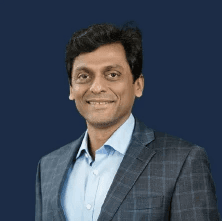
Deepak Subramanian is President & Managing Director of North America Unilever Food Solutions - having previously been a Member of the Management Committee of Hindustan Unilever Limited (HUL), the Indian subsidiary of Unilever, and a publicly listed company in India with a market cap of 70 billion USD. In addition to serving as the Executive Director – Homecare, HUL, he has also been the General Manager of the Homecare Business of Unilever for the South Asia region. He joined Unilever as a Management Trainee in India in 1995, after completing his B.A.(Honors) in Economics from St. Stephen’s College, University of Delhi.
In a global career spanning more than 28 years, he has lived and worked in India, Europe, and Asia and has worked across local, regional, and global sales and marketing roles and more recently in board-level General Management roles, bearing full profit and loss responsibility. He is also a non-Executive Director of the Hindustan Unilever Foundation, a member of the Global Advisory Board of Insider (a global growth management platform), the Web3 Marketing Association, and an advisor, mentor, and investor in deep tech and sustainability start-ups and venture capital funds like Antler and 500.
He is a graduate of the Executive Programme at Singularity University and a Certified Chair from the Advisory Board Centre, Australia.