

The shift that everyone in financial services can feel
Walk into any boardroom today, from banking to insurance to wealth management, and you’ll hear the same mix of ambition and anxiety: How fast do we need to move on AI? What’s hype? What’s real? And how do we turn our mountains of data, especially the messy, unstructured kind, into real enterprise value?
Financial services are deep in transformation mode. New expectations. New risks. New technology cycles that span months instead of years. And in the middle of all that noise, leaders face a deceptively simple mandate: move fast, but don’t break trust.
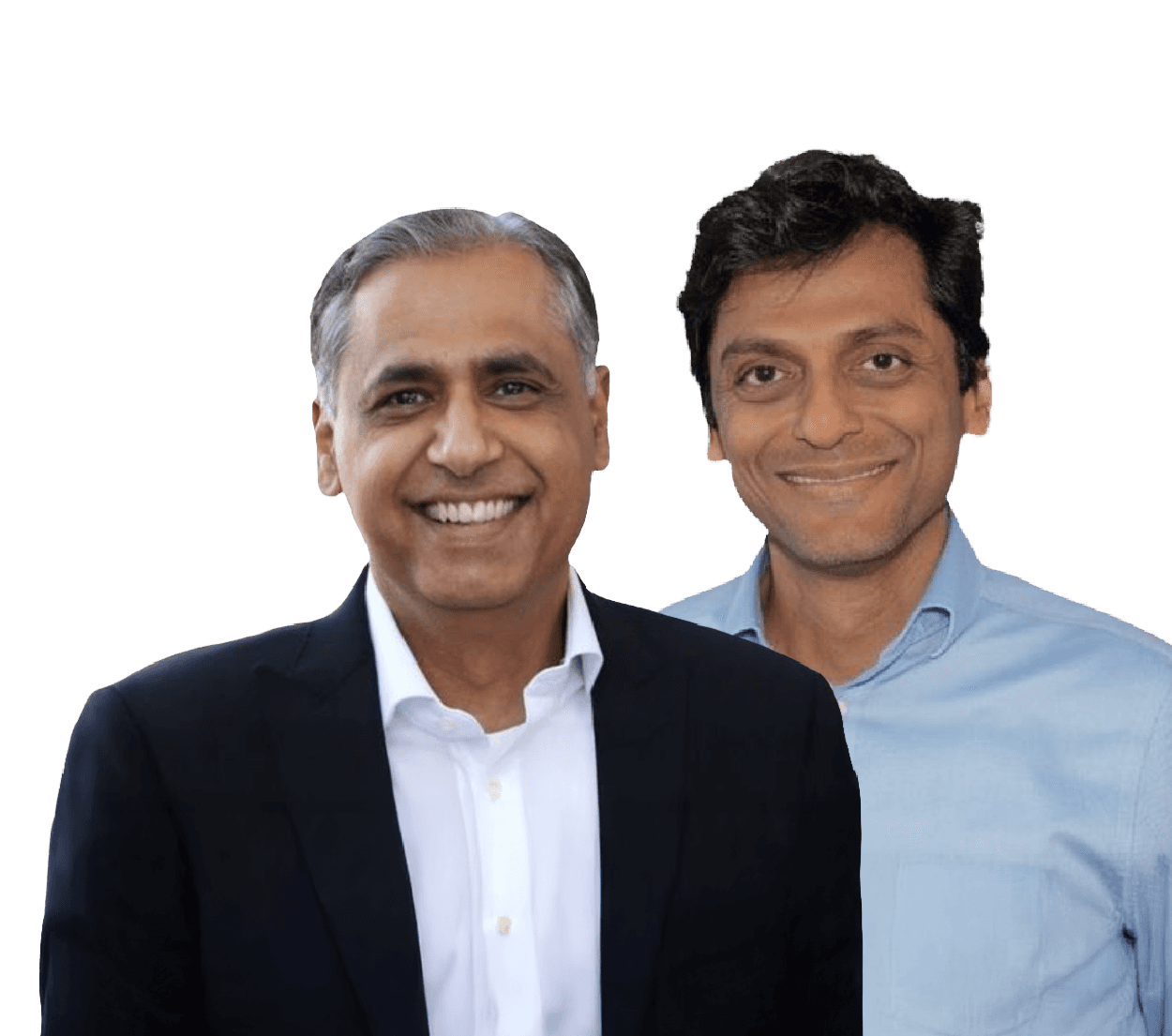
Few people understand this tension better than Pranay Agrawal, Co-founder of Fractal, who has helped global enterprises operationalize AI long before it trended on earnings calls, and Ramnik Bajaj, USAA’s Senior Vice President & Chief Data Analytics and Artificial Intelligence Officer, who has spent nearly three decades guiding some of the world’s largest financial institutions through technology, data and AI transformation.
Their conversation is candid, practical, and refreshingly grounded. It’s about what’s really happening inside financial services as companies race to mobilize unstructured data, scale responsible AI, and build organizations ready for what’s coming next.
Let’s dive in.
Career journey: Consulting to corporate leadership
Pranay: You’ve worked at the intersection of data, analytics, and financial services for decades, first advising the world’s largest institutions and now shaping the future from inside USAA. What has that journey taught you?
Ramnik: That learning never stops, especially when technology is rewriting the rules every few years. Consulting gave me the chance to get a panoramic view while deep diving into specific challenges across global banks and insurers tackling legacy systems, bringing new digital capabilities. After the financial crisis, the importance of good data and fast analytics became crystal clear.
Transitioning from Deloitte to Wells Fargo, and now to USAA, I gained something different: the long-term lens. In consulting, you solve defined problems. Inside an enterprise, you’re shaping what the next five, even ten years, should look like.
Pranay: What convinced you to cross over from consulting?
Ramnik: Persuasive leaders! But more seriously, the chance to transform at scale. Advising, solving challenges, and building solutions is rewarding; running the function is transformative. You’re accountable for the long-term outcomes.
Consulting teaches you patterns. Corporate leadership teaches you consequences.
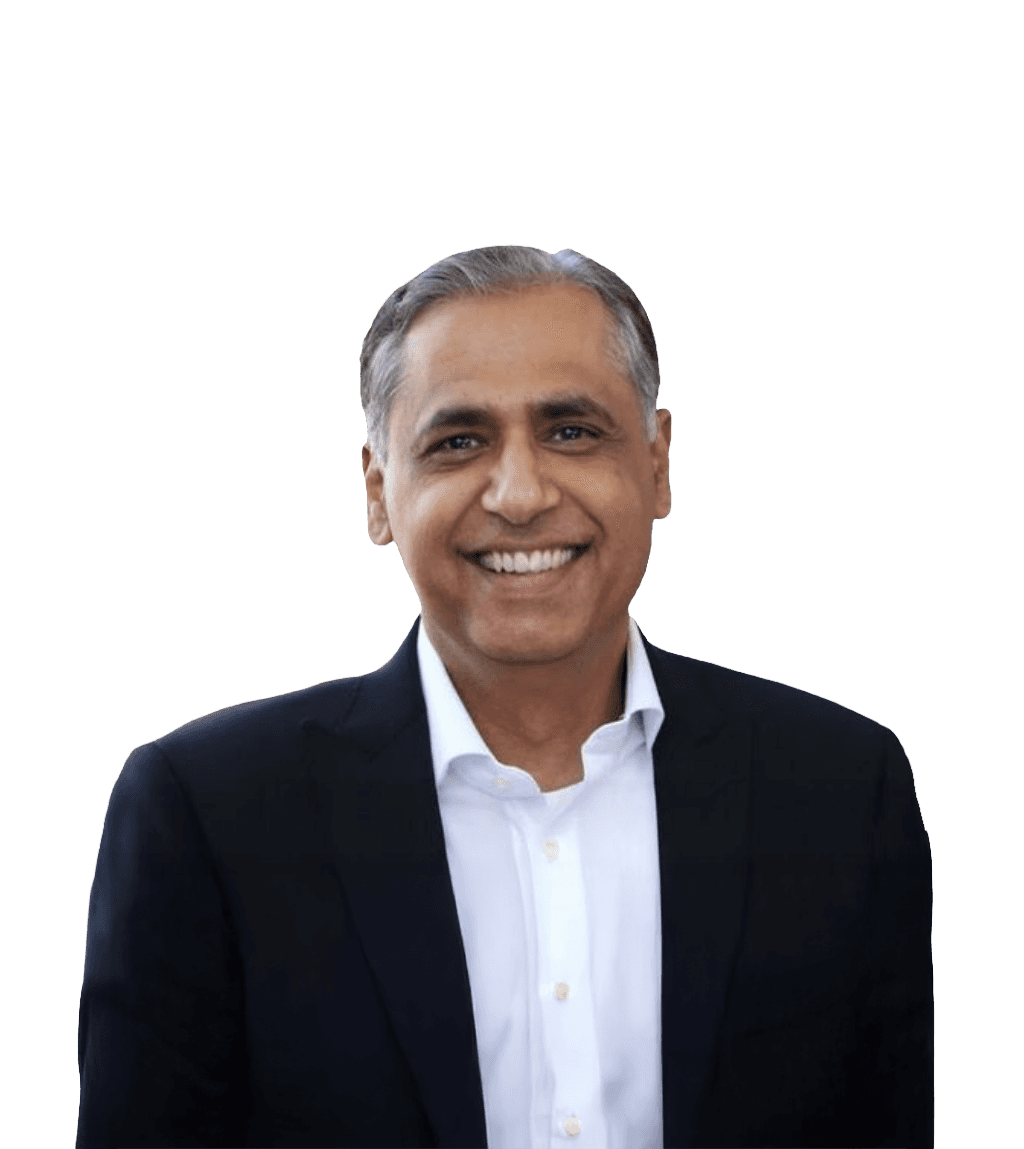
Ramnik Bajaj
Senior Vice President & Chief Data, Analytics & AI Officer, USAA
The big opportunity: Making sense of unstructured data
Pranay: Let’s talk industry. What challenges and openings do you see right now across banking, insurance, and life?
Ramnik: At USAA, we see everything under one roof: consumer banking, property and casualty (P&C) insurance, and life insurance. The biggest opportunity today? GenAI meets unstructured data.
Banking data has been structured for decades. But insurance, especially P&C, data is still powered by:
Long adjuster reports
Claims narratives
Field notes
Images
PDFs
Conversations
Humans have always filled the gaps. Now, AI can actually read this data at scale.
At the same time, the pace of change is accelerating. Fraud is rising. Cyber threats are evolving. And the workforce has to evolve with the technology.
Pranay: So, AI isn’t just speeding up what we already do; it’s improving risk models and lowering operating costs in an industry where premiums are rising nationally.
Ramnik: Exactly. And beyond efficiency, we’re entering an era of preventive insurance. Think telematics. Think home IoT. Think aerial imagery that proactively identifies risks and helps members mitigate them. Technology doesn’t just price risk anymore; it actively helps reduce it.
Insurance is shifting focus from responding to losses to helping prevent them.
Ramnik Bajaj
Senior Vice President & Chief Data, Analytics & AI Officer, USAA
Business Alignment, Prioritization & the Economics of AI
Pranay: Something you’ve emphasized in past interviews is business alignment. How do you ensure AI delivers value instead of becoming another innovation showcase?
Ramnik: The magic happens in the last mile, where AI meets workflow.
If a model sits in a lab, it creates zero value. When we integrate it into claims, underwriting, or operations, value becomes real.
That’s why we created an AI Council. It:
Balances bottom-up ideas with top-down strategy
Evaluates ROI, feasibility, risk, and regulatory fit
Ensures responsible adoption
Aligns funding with business outcomes
Pranay: And once a use case passes all that, how do you secure the investment?
Ramnik: The council includes the CFO. We use a very robust value framework. Traditional ML had great ROI, up to 8x in a year. GenAI-driven automations now show payback in quarters, not years.
Pranay: Faster cycles drive faster budgets.
Ramnik: Exactly. One example: RFP reviews. Vendors answer hundreds of standard due diligence questions. AI now reads, scores, and organizes responses. Humans still decide, but time savings run into thousands of hours annually.
AI that saves time is useful. AI that saves thousands of hours changes strategy.
Ramnik Bajaj
Senior Vice President & Chief Data, Analytics & AI Officer, USAA
The data foundation: What makes enterprise AI actually work
Pranay: You’ve said a unified data layer is essential. Why is this so critical?
Ramnik: Because agentic AI or any serious enterprise automation breaks without clean, connected data. We built a unified member data environment that can connect every interaction, every need, every life event across our lines of business.
This lets AI understand the full relationship, not fragments.
AI scale = data discipline.
Ramnik Bajaj
Senior Vice President & Chief Data, Analytics & AI Officer, USAA
Responsible AI: Values in a high-speed world
Pranay: Let’s end with trust. How do you keep AI aligned with values and privacy expectations?
Ramnik: Three pillars:
Transparency: Telling members where and why AI is used.
Opt-in: Identify uses that are best handled with opt-in.
Data minimization: Depersonalize and anonymize data whenever possible.
The insights often come from non-sensitive data. Personalization only happens at the last mile.
Pranay: You shared two great tests earlier:
Would a member be comfortable if they sat in the room while we planned this?
Would we be proud if it appeared on the front page of a national newspaper?
Ramnik: Exactly. If the answer to both isn’t yes, we reconsider.
How AI shows up in a leader’s day
Pranay: Last question. How do you personally use AI?
Ramnik: I’m a power user of EagleGPT, our enterprise AI assistant. I use it for deep technical research, tracking breakthroughs in AI, explainability, and agentic architectures. These fields evolve daily; AI helps me keep pace.
Pranay: Fantastic. Thank you, Ramnik, for this powerful conversation.
Ramnik: Thank you, Pranay. A pleasure.
What this conversation tells us about the future
In the end, what this conversation really highlights is how quickly AI is reshaping financial services, and how much opportunity is still ahead for organizations that approach it with both ambition and intention. Unstructured data is becoming a new competitive edge, especially in insurance, where claims notes, images, and narratives can finally be processed by machines at scale.
But the magic only happens when strong data foundations, smart prioritization, and close partnership between business and technology come together. And as Ramnik reminds us, moving fast doesn’t mean abandoning values; responsible AI, transparent, ethical, member-first, is what builds trust and unlocks long-term impact. It’s clear that the future belongs to institutions that can balance speed with stewardship, innovation with integrity, and cutting-edge technology with a deep understanding of the people they serve.
Written by Vanessa Thompson
In-person
Senior Vice President & Chief Data, Analytics & AI Officer, USAA, Ramnik leads the enterprise-wide vision for data, analytics, and AI across USAA’s banking and insurance businesses. Previously EVP & Chief Data Officer/ Head of Data Environment at Wells Fargo, and a 21-year Deloitte Consulting partner, he has led some of the world’s largest financial services transformations. He holds degrees from IIT Delhi and Stanford University.