

In a world where your phone unlocks your home, curates your entertainment, and anticipates your needs, it was only a matter of time before your car evolved beyond its mechanical roots.
But what is unfolding now is not incremental; it is foundational.
The modern automobile is no longer just a unit of mobility. It is becoming a digital lifestyle product, an intelligent system that learns, adapts, and integrates seamlessly into our connected lives. In a compelling episode of the Not Just AI podcast, Qualcomm’s Nakul Duggal and Fractal CEO Pranay Agrawal unpack this transformation, one that is quietly reshaping not just transportation but the very definition of a machine.
From horsepower to compute power: The rise of software-defined vehicles
For decades, the automotive industry competed on engineering precision, horsepower, torque, and manufacturing scale, defined by leadership. Yet, beneath this success lay an uncomfortable truth. While producing millions of vehicles annually, the industry remained under-leveraged in digital innovation.
Nakul Duggal saw this gap clearly. His question was simple yet disruptive: why should one of the world’s largest industries operate behind the technological curve that shapes every other sector?
That question prompted Qualcomm’s bold entry into the automotive market. But this was not a straightforward expansion. It required a fundamental reinvention of technology itself. Chips originally designed for smartphones had to be re-engineered to meet automotive standards, in which systems must endure for over 15 years, operate flawlessly in safety-critical environments, and deliver real-time responsiveness without fail.
This shift marked the beginning of the software-defined vehicle, a machine no longer fixed at the point of sale, but continuously evolving through software, data, and intelligence.
Why would you have an industry that is not at par with where the rest of the world is?

Nakul Duggal
Executive Vice President & Group General Manager, Automotive, Industrial & Embedded IoT and Robotics at Qualcomm
The battle for the cockpit: Where experience meets intelligence
As vehicles became more connected, a new battleground emerged: the cockpit.
Initially, the idea of integrating smartphone ecosystems into the car faced resistance. Automakers were cautious about ceding control over the in-car experience. Yet, as digital behaviors began to shape consumer expectations, the cockpit transformed from a control panel into something far more strategic.
It became an experience hub.
Qualcomm recognized this early. By combining connectivity, AI, and immersive interfaces, the cockpit could evolve into a personalized environment, one that seamlessly blends entertainment, productivity, and assistance. The car was no longer just transporting passengers; it was engaging them.
This redefinition of the cockpit shifted the industry's value from purely mechanical excellence to experience-led differentiation.
Safety meets intelligence: The ADAS, LiDAR, and AI revolution
While experience enhances engagement, the true transformative power of AI in automotive lies in safety.
Every year, approximately 1.5 million lives are lost globally due to road accidents. The promise of AI is stark and compelling: to reduce this number dramatically, potentially to near zero.
Technologies such as Advanced Driver Assistance Systems (ADAS), LiDAR, and autonomous driving are at the forefront of this shift. But building these systems is fundamentally different from building consumer applications. They must operate in real time, with zero tolerance for error, and under conditions where milliseconds can determine outcomes.
This is why Qualcomm approached the problem differently. Instead of treating AI as a software overlay, the company designed hardware and AI together, ensuring that sensing, computation, and decision-making operate as a unified system at the edge.
Equally critical was the need to build trust. In an industry where mistakes can be fatal, trust becomes more valuable than speed or scale.
It wasn’t so much about building a business. It was about: can we build trust with this ecosystem?

Nakul Duggal
Executive Vice President & Group General Manager, Automotive, Industrial & Embedded IoT and Robotics at Qualcomm
Signals in the noise: Recognizing early success
Transformations of this magnitude rarely come with clear indicators. There are no dashboards that confirm progress, no immediate returns that validate direction.
Instead, success reveals itself through alignment.
For Qualcomm, the strongest signal came from the ecosystem itself. Across geographies and stakeholders, there was a consistent belief that the future of automotive had to be digital and intelligent. There was no meaningful resistance to the direction, only questions of execution and timing.
External forces amplified this conviction. Tesla redefined consumer expectations with software-first vehicles, while China’s rapid advancements introduced a new level of urgency across global markets. Together, these shifts confirmed that the industry was not just evolving, it was accelerating.
Full self-driving: The future that’s closer than it appears
Few innovations capture the imagination like Full Self-Driving (FSD). Once considered distant, it is now steadily approaching reality.
At its core, FSD is built on a layered architecture. The foundational layer consists of hard-coded safety systems, guardrails that ensure essential functions such as braking, lane discipline, and collision avoidance. Above this sits an adaptive AI layer that continuously learns from real-world data, improving its ability to make complex driving decisions.
This creates a powerful feedback loop. As more vehicles adopt autonomous capabilities, they generate more data, enhancing the system’s intelligence and, in turn, increasing reliability.
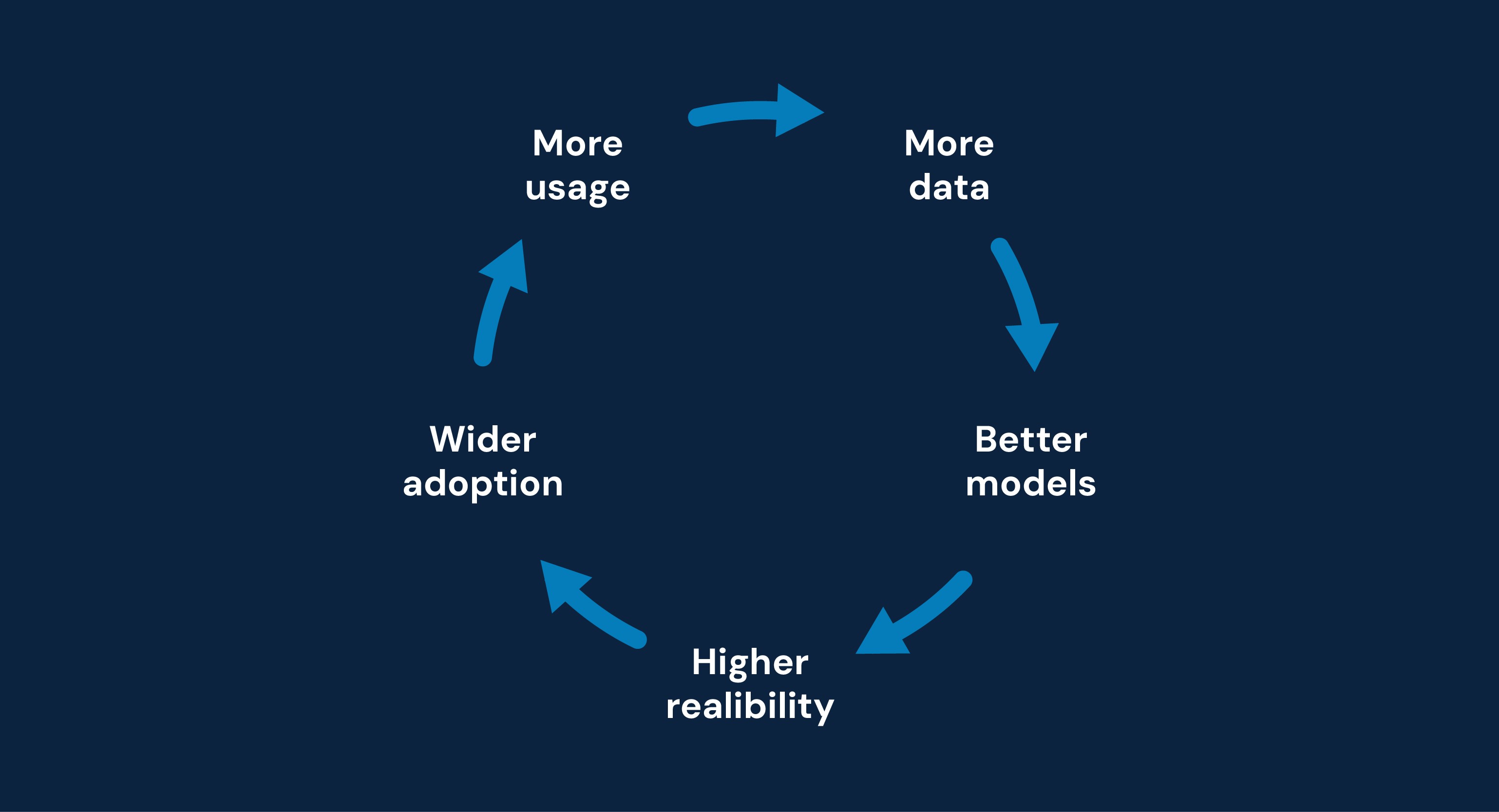
The Flywheel effect
The implication is profound. Within the next decade, autonomous driving could transition from a premium feature to a standard expectation, reshaping not just mobility but urban life itself.
The car as a digital lifestyle product
As this transformation unfolds, a critical distinction emerges between lifestyle and safety.
A glitch in music playback is an inconvenience. A failure in braking is catastrophic.
This duality defines the complexity of modern automotive systems. Vehicles must deliver seamless, engaging digital experiences while maintaining uncompromising safety standards. Achieving this balance requires rigorous testing, regulatory compliance, and a deep understanding of real-world scenarios.
As Duggal emphasizes, building these systems is not about incremental improvement; it is about exhaustive validation.
You have to test the heck out of your system.

Nakul Duggal
Executive Vice President & Group General Manager, Automotive, Industrial & Embedded IoT and Robotics at Qualcomm
The Road to AGI: Data, adoption, and real-world learning
The journey toward Artificial General Intelligence (AGI) is often framed as a technological leap. In reality, it is a gradual evolution driven by data, adoption, and iterative learning.
FSD offers a compelling blueprint. The more the system is used, the more data it gathers. The more data it gathers, the more accurate and reliable it becomes. Over time, this continuous loop transforms capability into trust.
This model extends far beyond automotive. From healthcare to industrial systems, the same principles apply, embedding intelligence closer to where decisions are made, enabling real-time, context-aware responses.
The more data you get, the more people use it, the more you can rely on the technology.

Nakul Duggal
Executive Vice President & Group General Manager, Automotive, Industrial & Embedded IoT and Robotics at Qualcomm
AI investment and the economics of transformation
The past decade has seen unprecedented investment in AI. Yet, as with any transformative technology, returns do not materialize immediately.
The economic cycle is predictable. Early stages are characterized by heavy investment and limited profitability. As the technology matures and adoption scales, value creation begins to accelerate.
Today, we are entering that critical phase. While early AI applications have focused on controlled environments such as IT workflows, the next wave will extend into complex, real-world systems, unlocking significantly greater impact.
A key driver of this shift is the move toward edge computing. Intelligence is no longer confined to centralized data centers; it is being embedded directly into devices, enabling faster, more responsive decision-making.
Adoption at scale: Why some markets move faster
Not all markets adopt innovation at the same pace. Industries burdened by legacy infrastructure often move slower, while those with fewer constraints can leapfrog ahead.
China provides a powerful example. In some cities, driver assistance technologies have achieved near-universal adoption, driven by both necessity and opportunity. This highlights a critical insight: successful transformation depends not just on technological capability, but on how seamlessly it integrates into everyday life.
For leaders, the mandate is clear, reduce the distance between innovation and adoption.
Advice to CEOs: Leading in the age of AI
As AI reshapes industries, leadership must evolve alongside it.
Understanding AI conceptually is no longer sufficient. Leaders must engage directly with the technology, experimenting, learning, and experiencing its capabilities firsthand. Only then can they make informed decisions about how to integrate it into their organizations.
This transformation extends beyond tools. It requires rethinking workflows, reskilling teams, and fostering a culture that embraces continuous change.
You really have to become a user… Once you see what it is capable of, you have no option but to figure out how you will embrace it.

Nakul Duggal
Executive Vice President & Group General Manager, Automotive, Industrial & Embedded IoT and Robotics at Qualcomm
Conclusion: Driving the next era of intelligence
At its core, the transformation of the automotive industry is about more than cars.
It is about building systems that learn, adapt, and operate with intelligence at scale. It is about reducing risk, enhancing experience, and unlocking new forms of value. And most importantly, it is about applying technology in ways that have a tangible impact on human lives.
From digital cockpits to autonomous driving, from edge AI to AGI ambitions, the journey is well underway.
The question for leaders is no longer whether this transformation will happen.
It is whether they are prepared to lead it.
In-person

Nakul Duggal is the Executive Vice President and Group General Manager for Automotive, Industrial, Embedded IoT, and Robotics at Qualcomm Technologies. In this role, he oversees global strategy, product roadmaps, partnerships, and growth initiatives for Qualcomm’s automotive and IoT businesses. Duggal has led Qualcomm’s automotive business since its launch in 2011, building the company’s Snapdragon Digital Chassis platform and helping Qualcomm become a major technology partner for global automakers across connectivity, digital cockpit, and driver-assistance systems. He joined Qualcomm in 1995 and has held numerous engineering and leadership roles across wireless infrastructure, networking, and mobile technologies. Duggal holds a B.S. in Electronics and Communications Engineering from M.S. University (India) and an MBA from the UCLA Anderson School of Management

Pranay Agrawal is the Co-Founder and CEO of Fractal, a global AI and analytics company focused on driving enterprise-wide opportunity optimization.